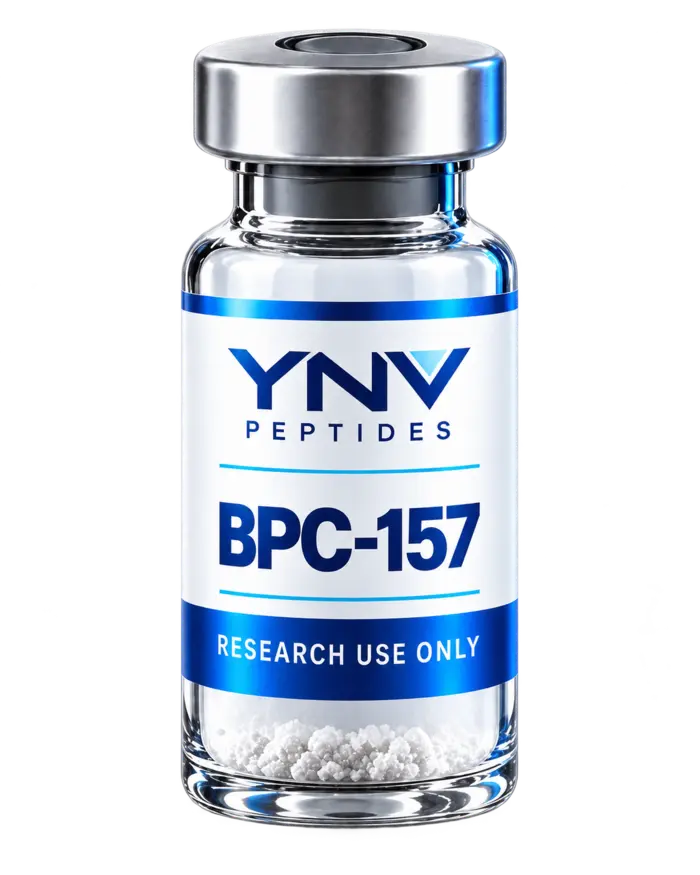
Synthetic peptide
BPC-157
A synthetic peptide containing 15 amino acids, investigated in laboratory and preclinical models. Research examines its interactions with cellular signaling and vascular-response pathways.
Research overview: BPC-157The YNV research collection
Explore ten research references with YNV bottle artwork and a concise scientific overview.
Download two-page catalog Scan to view
A synthetic peptide containing 15 amino acids, investigated in laboratory and preclinical models. Research examines its interactions with cellular signaling and vascular-response pathways.
Research overview: BPC-157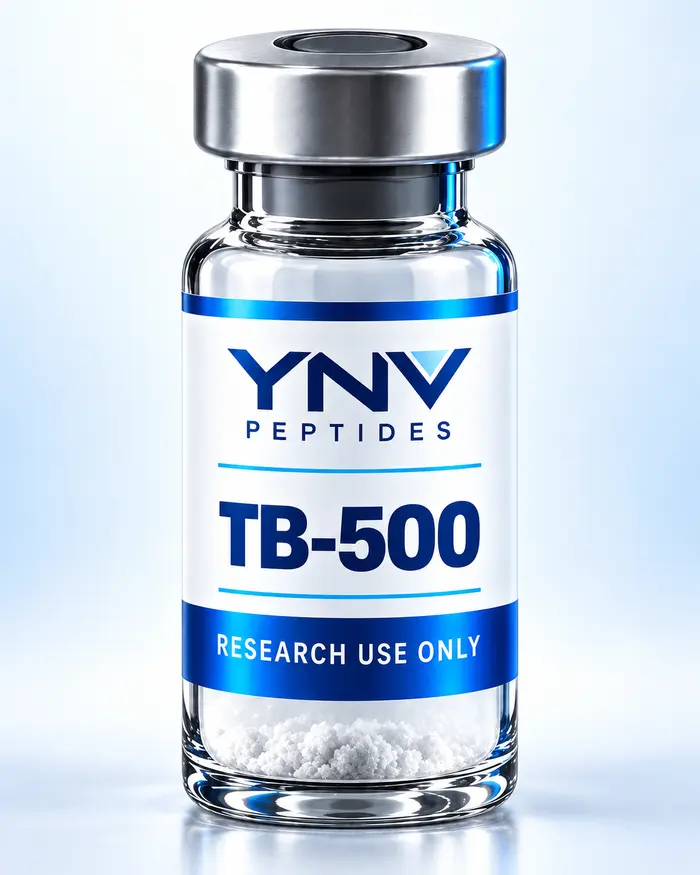
A research peptide name associated with a fragment of thymosin beta-4, a protein involved in actin interactions. The exact sequence and composition should be confirmed in batch documentation; findings for full-length thymosin beta-4 cannot automatically be applied to a fragment.
Research overview: TB-500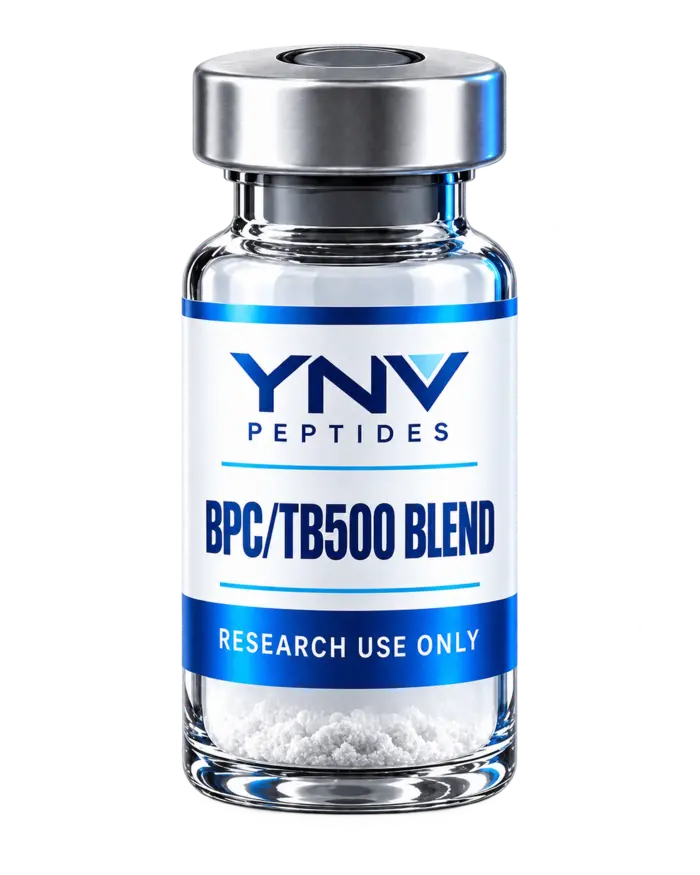
A combined research reference containing BPC-157 and a TB-500 component. The blend ratio and molecular identities require batch confirmation; research on individual components does not establish the properties of the combined formulation.
Research overview: BPC/TB500 Blend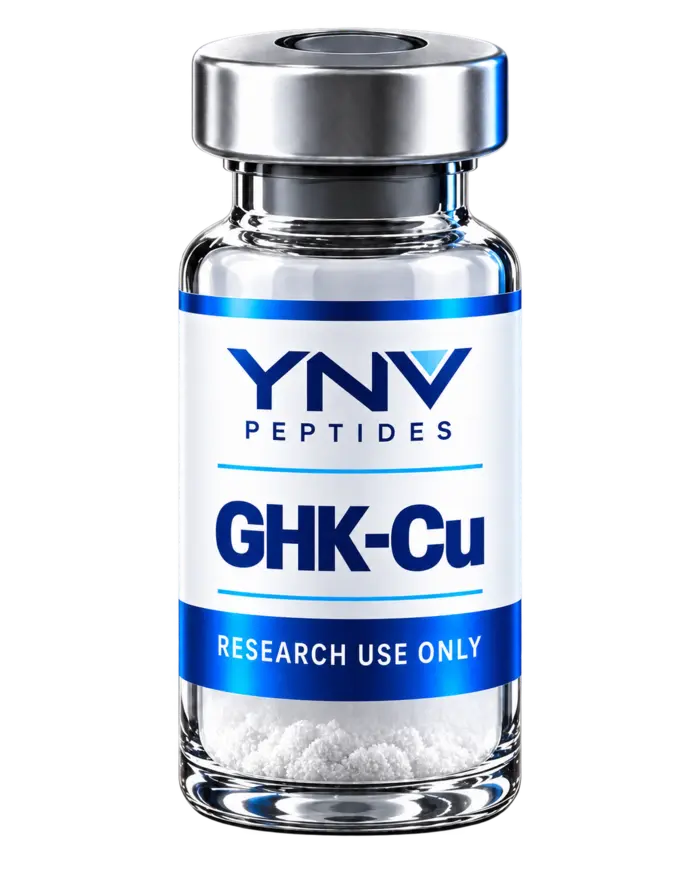
A complex formed by the three-amino-acid peptide GHK and copper ions. Laboratory studies examine copper binding and extracellular-matrix processes, including collagen synthesis in cultured fibroblasts.
Research overview: GHK-Cu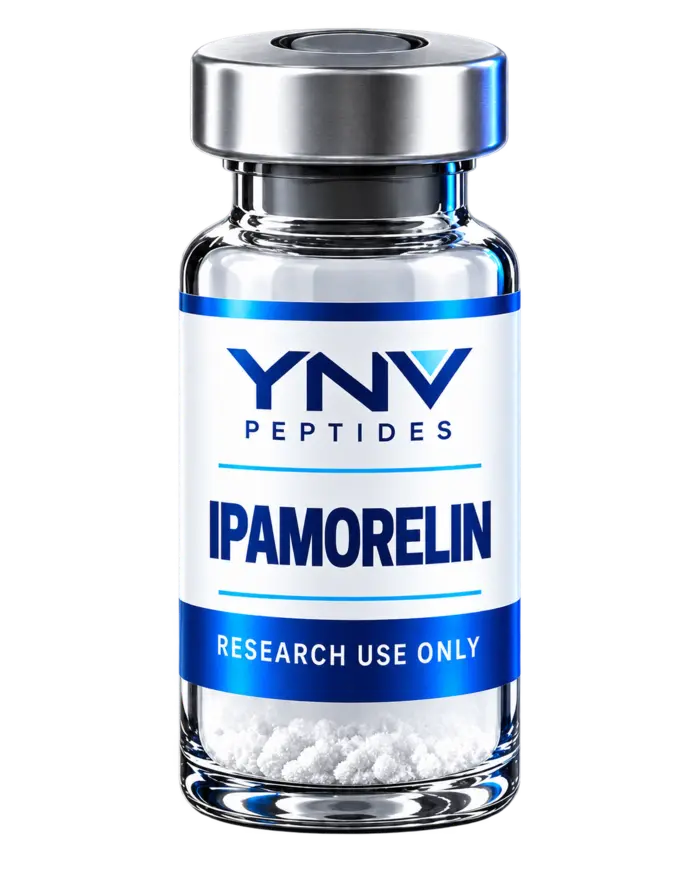
A synthetic five-amino-acid peptide studied as a growth hormone secretagogue. Experimental research examines its receptor activity and selectivity in endocrine signaling models.
Research overview: Ipamorelin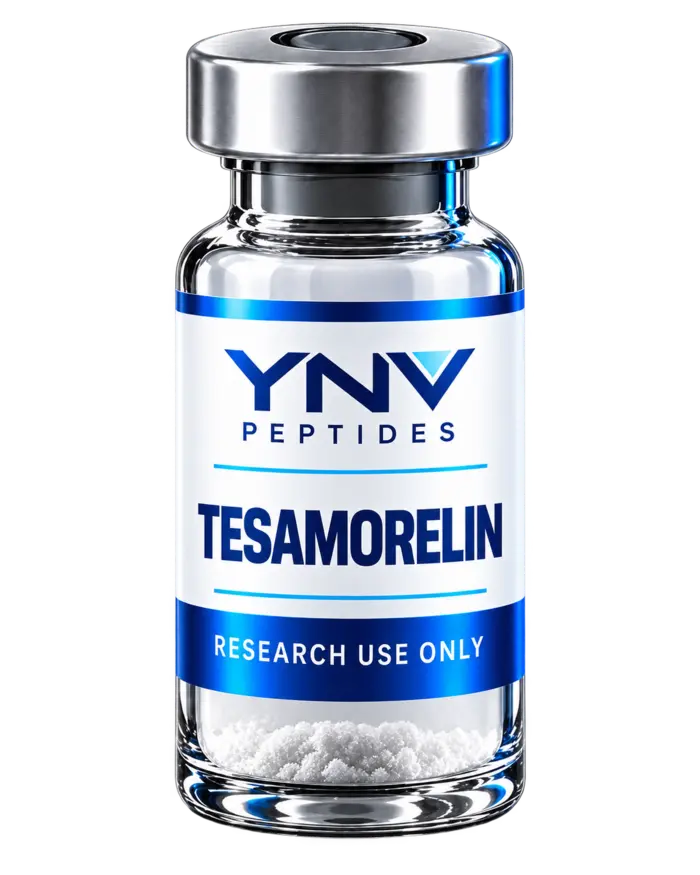
A synthetic analog of growth hormone-releasing hormone (GHRH). Research examines its interaction with the GHRH pathway; the YNV research reference is not represented as an approved prescription formulation.
Research overview: Tesamorelin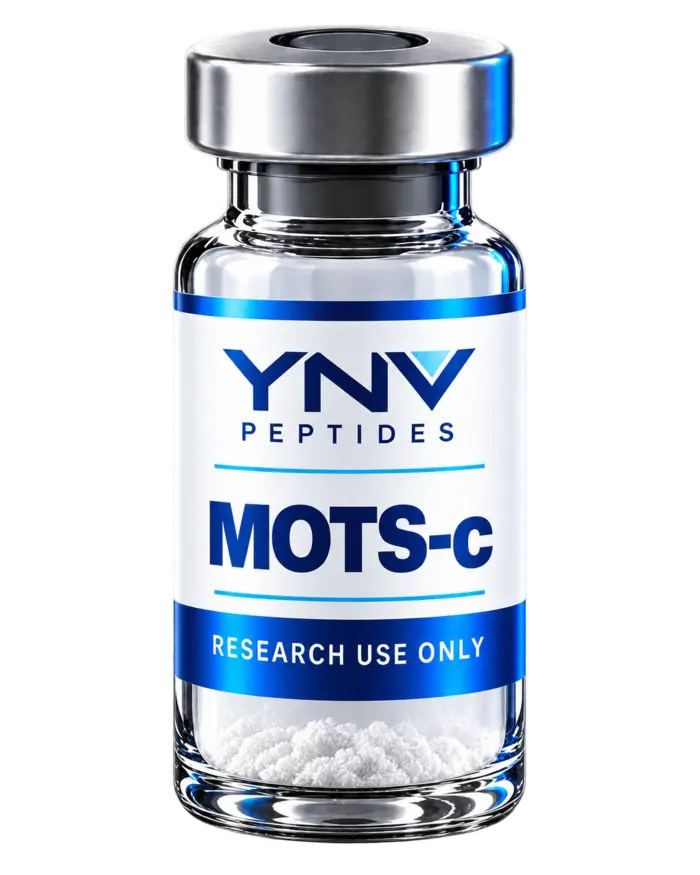
A 16-amino-acid peptide encoded within mitochondrial genetic material. Laboratory and preclinical studies investigate its role in cellular energy sensing and metabolic signaling.
Research overview: MOTS-c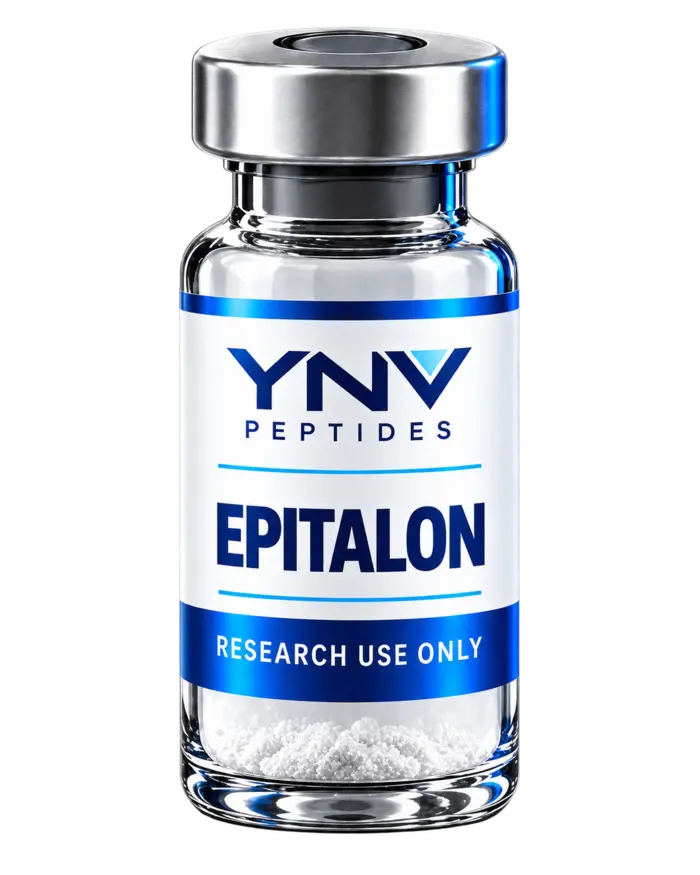
A synthetic four-amino-acid peptide also called epithalon. Cell-based studies investigate telomerase activity and telomere biology; these findings do not establish an extension of human lifespan.
Research overview: Epitalon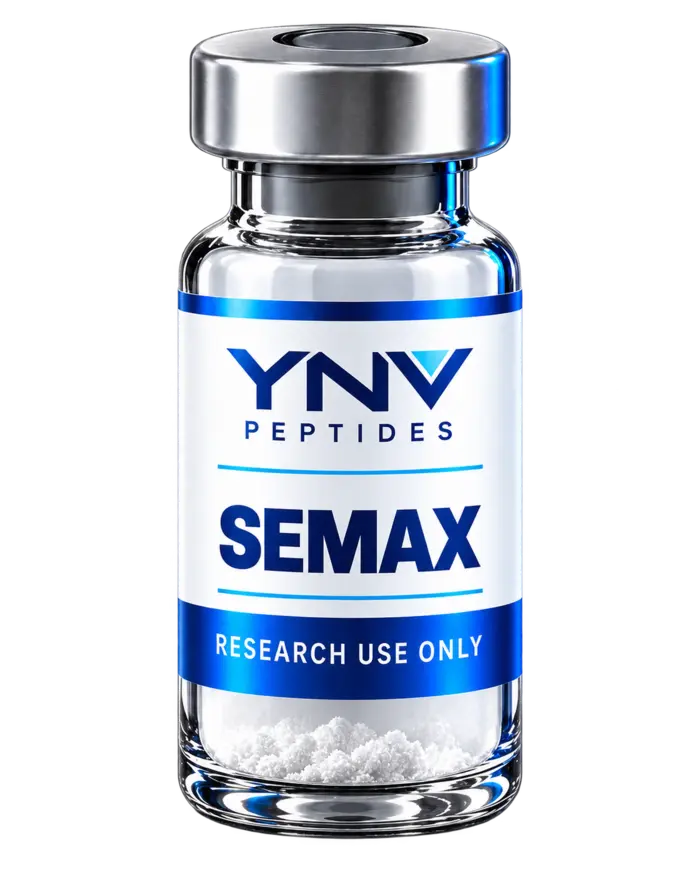
A synthetic seven-amino-acid peptide related to a fragment of ACTH. Experimental studies examine its molecular interactions, including peptide breakdown and signaling in nervous-system models.
Research overview: Semax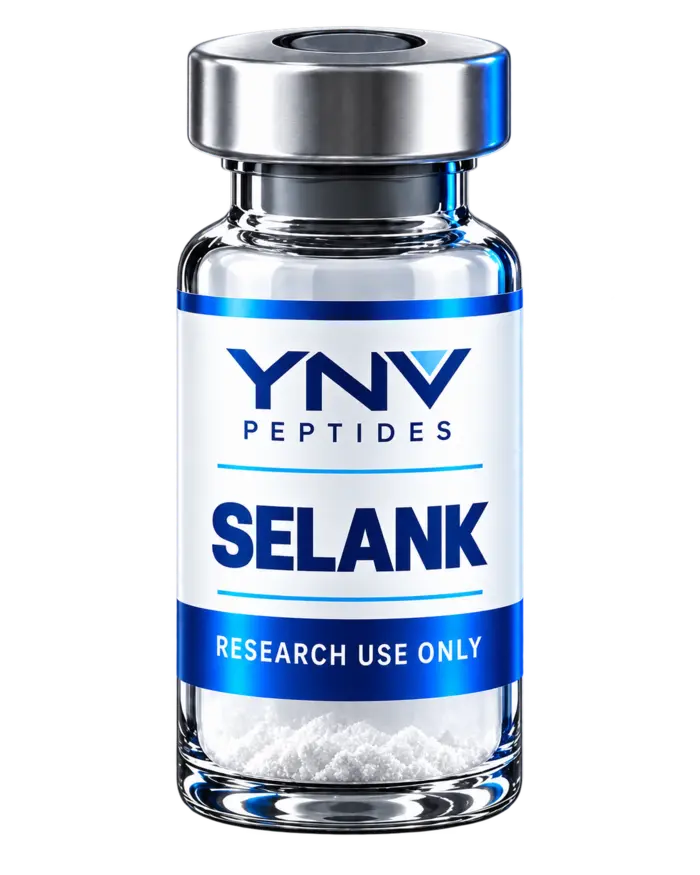
A synthetic seven-amino-acid peptide derived from the tuftsin sequence. Laboratory research examines its interactions with peptide-degrading enzymes and other signaling processes.
Research overview: SelankBatch specifications and certificates of analysis have not yet been published. Each research overview includes a documentation area for verified identity, vial content, and analytical results when available.
Browse all existing research references